Eye Surgery for Dogs & Cats in Prince George, BC
What is Veterinary Eye Surgery
At CHVC, we perform eye surgery for dogs and cats with cherry eye, and other eye related conditions.
The most common eye surgeries we perform for pets include:
Entropion and Ectropion Surgery
Entropion and ectropion surgeries correct eyelids that roll in or outwards. When they are malformed, they can cause corneal irritation and even ulcers. This is often a preventative surgery.
Third Eyelid Gland Repositioning Surgery
Prolapsed glands of the third eyelid, also called “cherry eye” requires corrective surgery to reposition and anchor the gland back in its proper place.
Why We Perform Eye Surgery for Pets
We want your pets to live their lives to the fullest, and that means optimizing their quality of life.
We perform regular evaluations of the eyes and vision as part of our recommended annual exams, and in cases where we detect problems with their eyesight, such as cataracts and glaucoma, we’ll discuss treatment options, including surgical intervention.
If you notice any physical changes to the eye like cloudiness, bulging, redness, or unusual discharge, or if your pet is showing signs of vision problems such as bumping into things, hesitancy with stairs or jumping, startling, or even increased anxiety, please bring your pet in for a check-up.
What to Expect from Your Pet’s Eye Surgery
If your pet is showing signs of vision problems, we’ll perform some additional testing to diagnose the exact issue, including an ultrasound.
Once we’ve determined the issue, we’ll discuss your treatment options, including surgery. Eye surgery for pets is always performed under general anesthesia, so we’ll need your pet to fast for 12 hours before their scheduled appointment time. Once you bring your pet in, we’ll perform a physical exam and some testing to determine whether they are healthy enough to go under anesthesia.
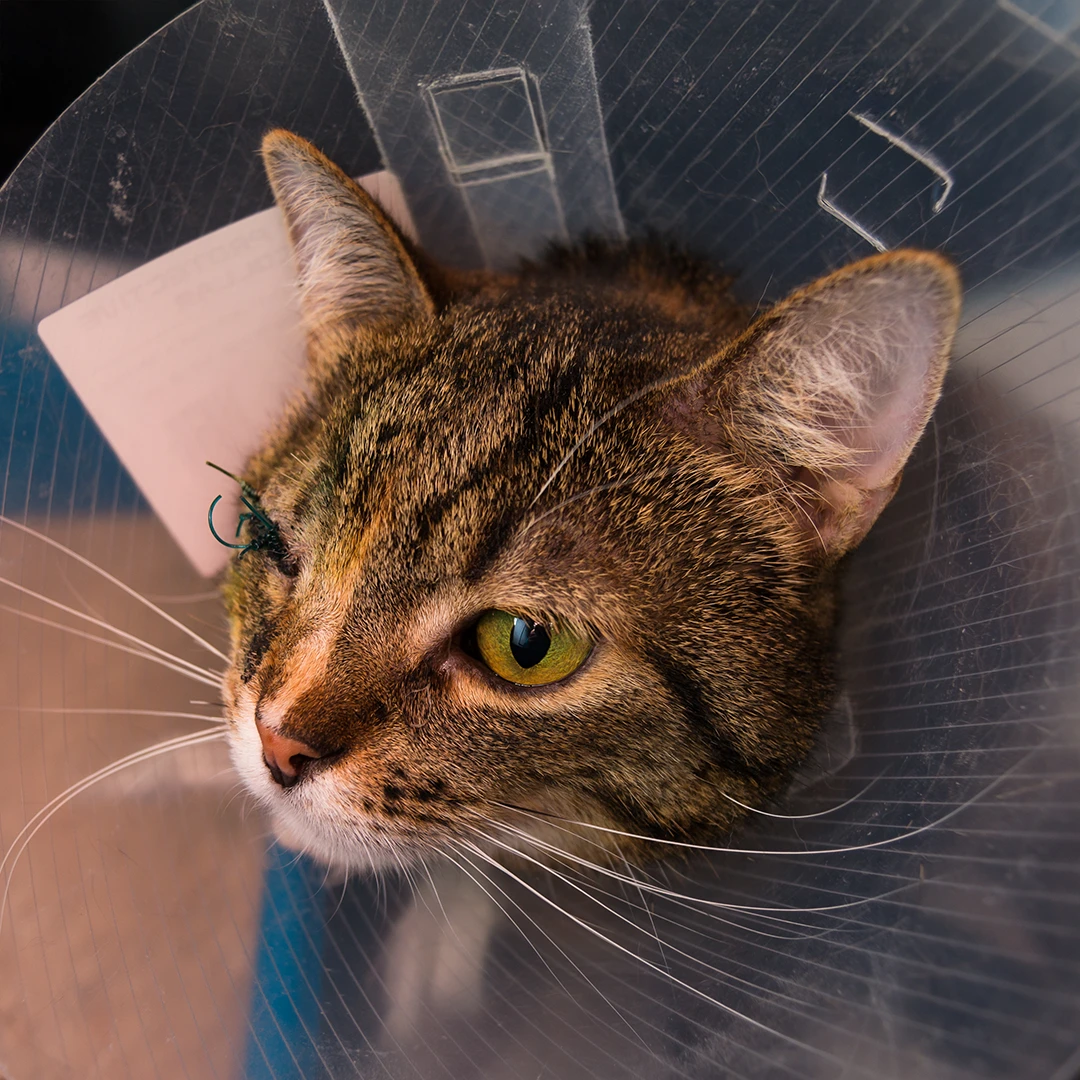
After surgery, we’ll provide you with a collar that they will need to wear for several weeks as well as eye drops, and possibly pain medication, along with a schedule for administering them. We’ll also recommend restricted activity in some cases, including preventing running and jumping.
Your pet’s vision should improve quickly, but we’ll book in appointments to ensure that your pet is recovering and to check for signs of infection or inflammation.