
Arthrex Tightrope System® Cranial Cruciate Ligament Surgery
What is Arthrex Tightrope System® Surgery
Arthrex Tightrope System® Surgery is a surgical technique to help stabilize your pet’s joints after an injury.
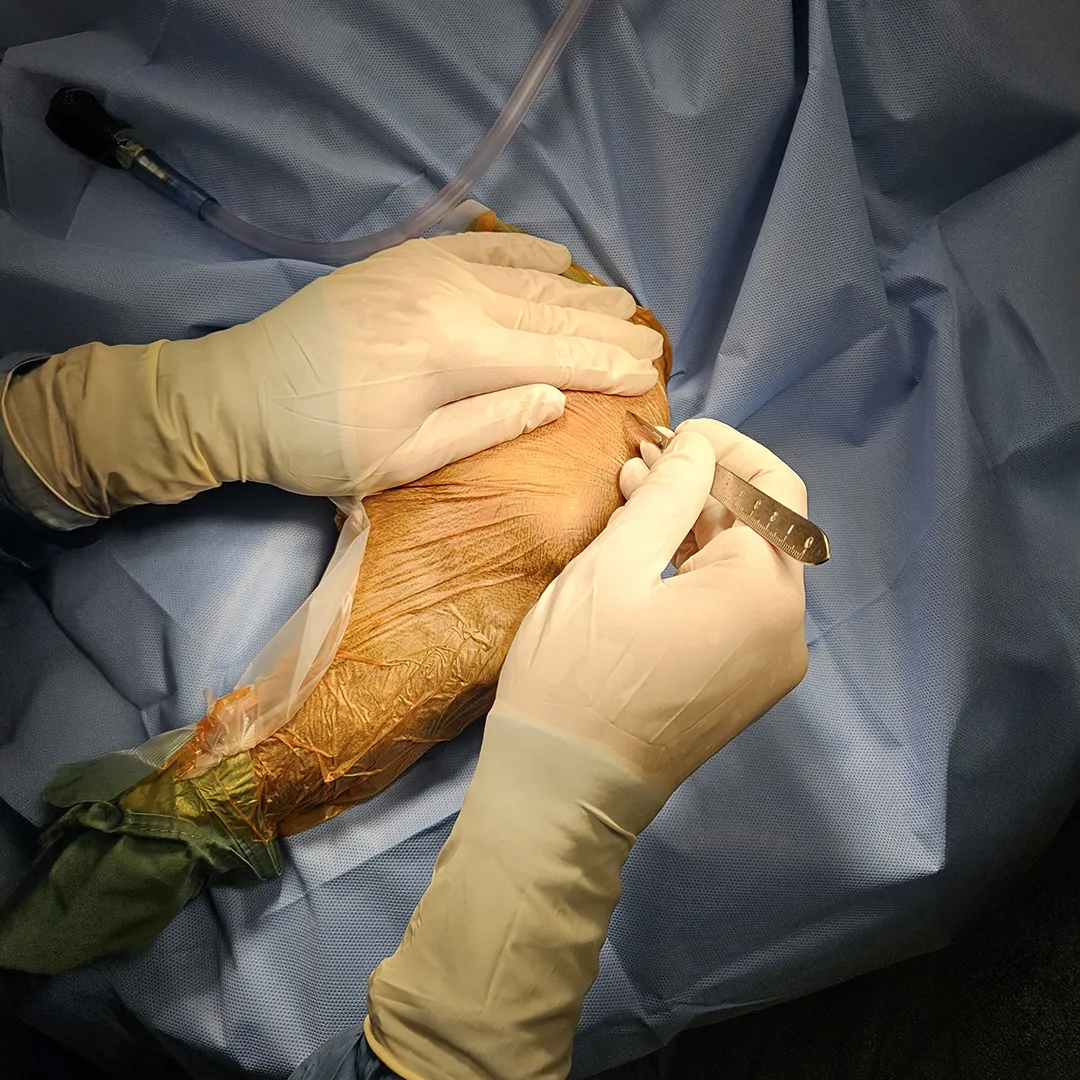
At CHVC in Prince George, we use Arthrex Tightrope System® Surgery for dogs and cats who have torn their Cranial Cruciate Ligament (CCL). Arthrex Tightrope System® Surgery is a surgical technique to help stabilize your pet’s joints after an injury like a torn CCL, which is the equivalent of an ACL in an animal.
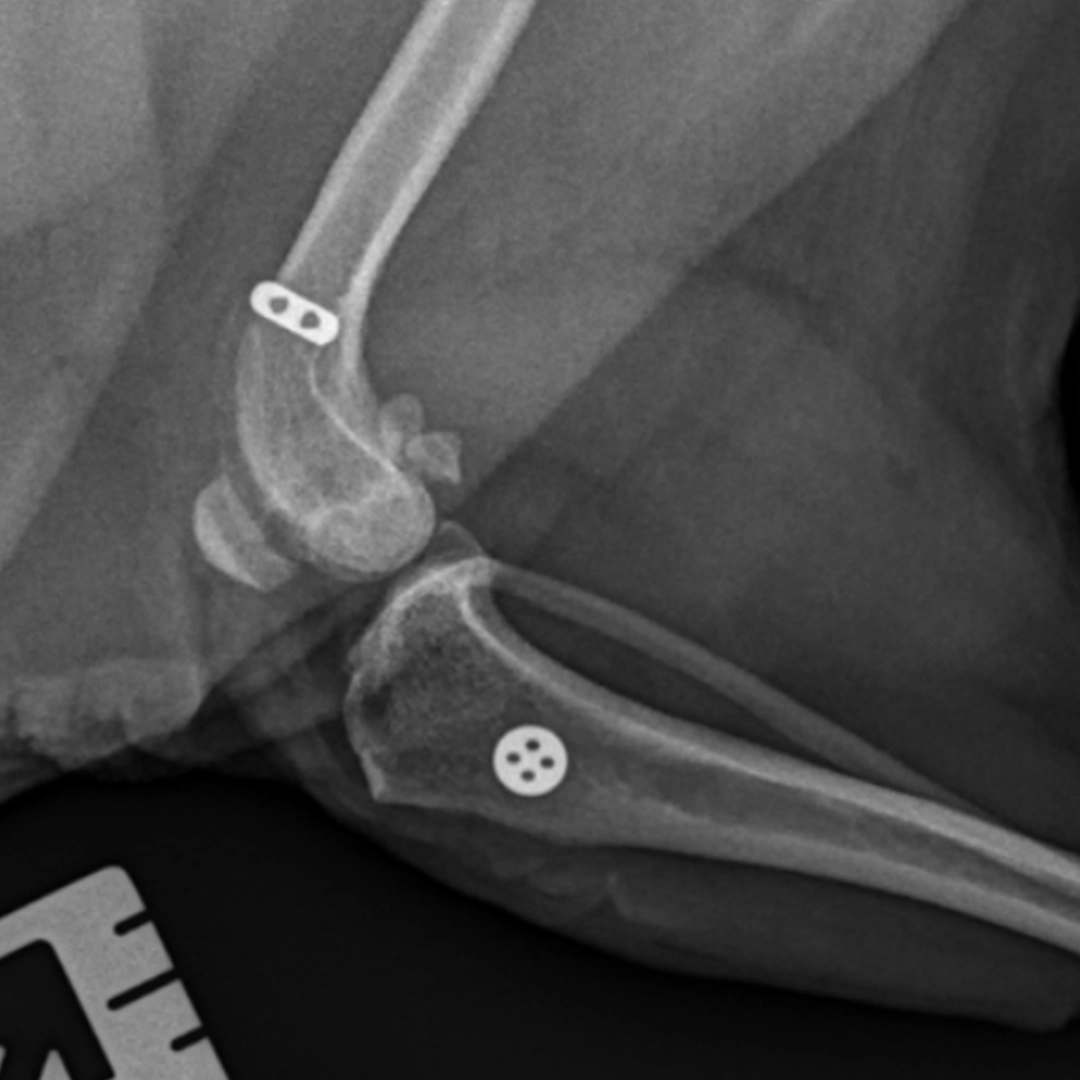
It involves implanting a prosthetic ligament, which can support 1000 lbs, 10 times more than any prosthetic ligaments used previously for veterinary medicine. The implant runs from the femur to the tibia through small holes and is held in place with small metal buttons on the outside. This replicates the function of the natural ligament, taking a large amount of strain off of the healing joint.
Large dogs are the most frequent patients for this surgery as they injure their CCLs at the highest rate, but it can be successfully used on smaller dogs and cats when they require that assistance.
Why We Use Arthrex Tightrope System® Surgery
CCL injuries are the single most common orthopedic injury in dogs.
Performing an Arthrex Tightrope System® CCL surgery lets us stabilize the injury, preventing the knee from moving back and forth excessively. That abnormal movement is what causes pain and chronic inflammation.
There are other surgical procedures that are very effective in assisting pets with CCL injuries, including Tibial Plateau Level Osteotomy (TPLO), but Arthrex Tightrope surgery is one of the least invasive and has one of the shortest recovery times.
What To Expect from Arthrex Tightrope System® Surgery
We’ll meet with you before hand to discuss the plan and address any questions or concerns you have.
Your pet will need to be placed under anaesthesia for this procedure, so you will need to have your pet fast for 12 hours before hand, but you should encourage them to drink lots of water.
After the surgery, we’ll give you detailed instructions for home care as well as pain medication. You will also need to keep your pet in strict confinement for several weeks to allow the bone and soft tissues to heal properly, but we’ll give you a comprehensive schedule with check ups designed for your pet and their injuries, specifically before you leave the clinic.