Complete Dental Care for Pets
Why We Have Dental Care for Pets
Your pet’s dental care is an essential part of their overall health and welfare.
At College Heights Veterinary Clinic in Prince George, we provide complete dental care for dogs, cats, and ferrets, including dental cleanings, extractions, and gingivitis and periodontal disease treatment for happier, healthier pets.
Oral disease isn’t only a dental problem—it can actually kickstart other diseases both in the mouth and throughout the body. Pets with periodontal disease are even exposed to bacteria in their bloodstream daily, creating a state of chronic disease. This often requires dental surgery or other serious measures to treat.
Fortunately, there are ways to help. Aside from regular cleaning visits with us, you can take preventative measures at home. When you bring your pet in for a visit, we’ll advise you on the best snacks for oral health, and walk you through how to clean your pet’s teeth.
How to Know if your Pet has Oral Disease
Humans visit the dentist all the time, but pets sometimes get left behind when it comes to oral health.
We recommend a yearly visit for a dental exam and cleaning for pets as a preventative measure, but if you notice signs of oral disease at any time, it’s a good idea to make an appointment.
Common signs of dental disease include:
What to Expect During Your Pet’s Dental Appointment
Tooth cleaning is a little more involved for our friends with fangs. Here’s how to prepare.
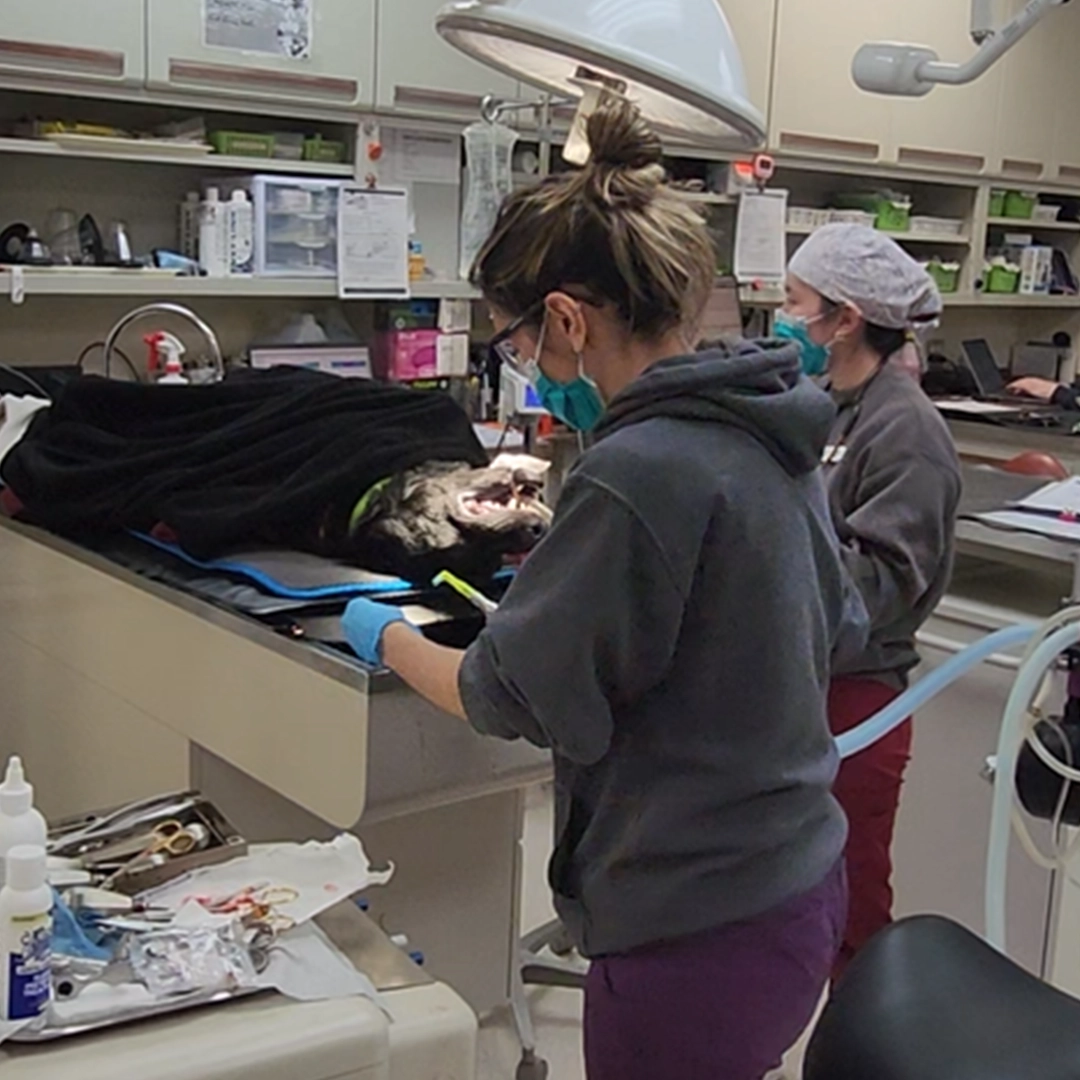
Pets are always anaesthetized for dental surgery and dental cleaning for their own safety and ours (bites aren’t fun), which means we’ll need you to have your pet fast for 12 hours before their appointment. You’ll also need to bring your pet in in the morning, and we’ll do a physical exam and some bloodwork to ensure they’re healthy enough for anesthesia.
A full dental procedure usually includes:
We’ll monitor your pet carefully while they wake from the anesthesia, and we’ll provide you with pain medication, as well as antibiotics to treat infections if we find signs of them, and instructions for their diet after their appointment. They may need to eat soft foods for a short period, depending on what procedures we’ve completed.