Endoscopy for Cats, Dogs, and Ferrets in Prince George, BC
What is a Veterinary Endoscopy?
Diagnosing conditions and performing procedures in the digestive tract and other parts of the body.
At CHVC, we use endoscopies for dogs, cats, and ferrets in Prince George to help us diagnose conditions and perform procedures in the digestive tract and other parts of the body.
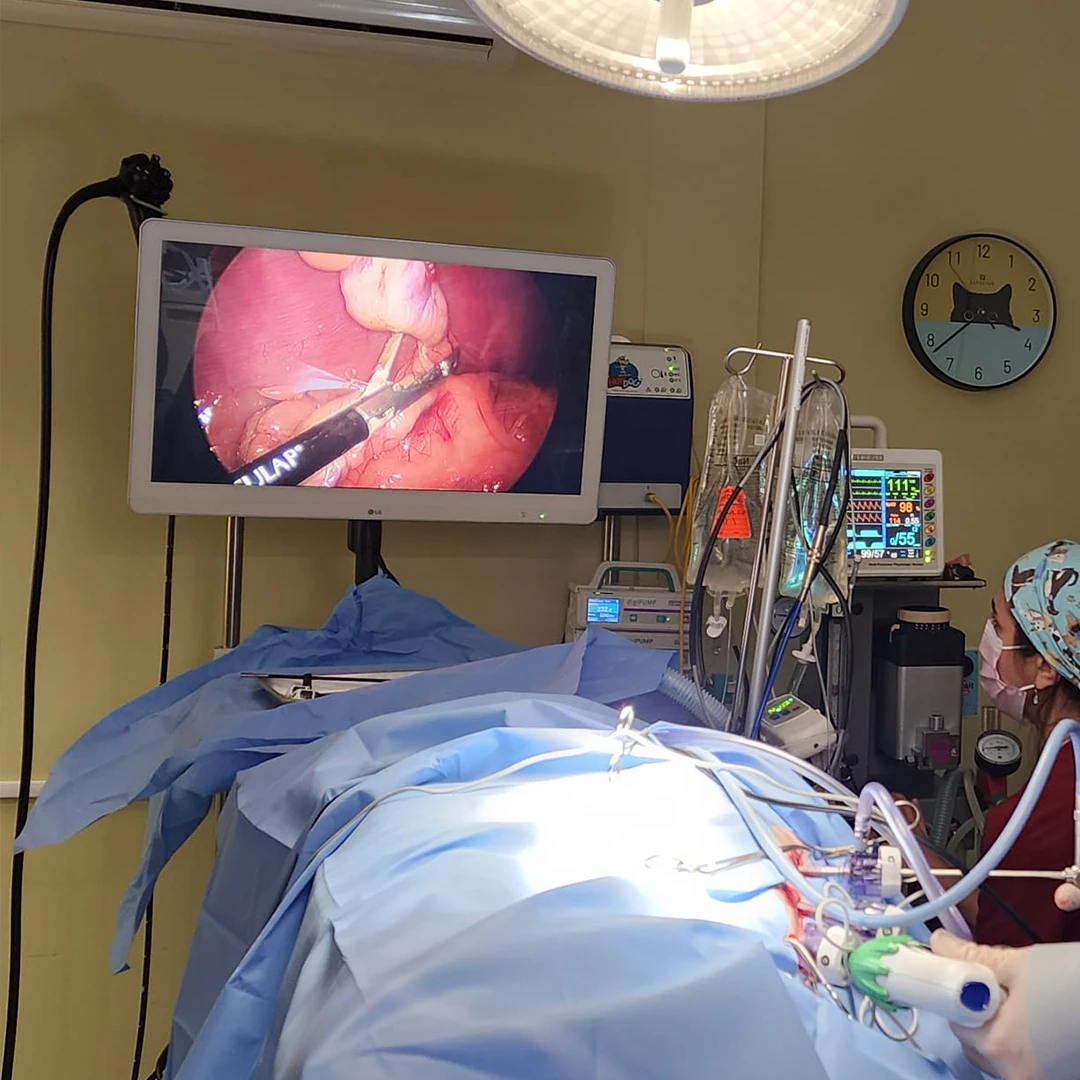
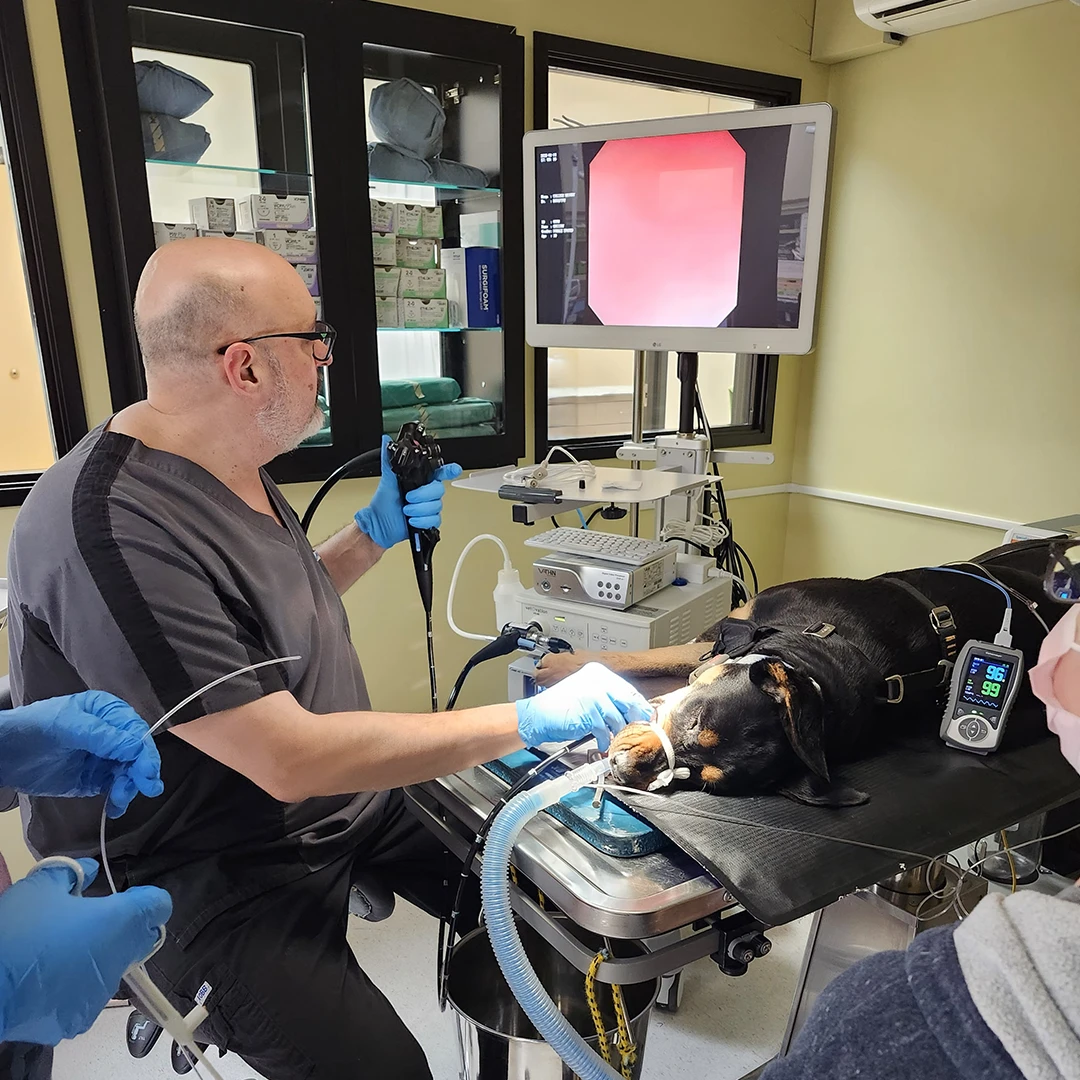
An Endoscopy is a minimally invasive diagnostic procedure that uses a long, flexible tube with a camera to look inside your pet’s body through the mouth or rectum to examine organs like the stomach, intestines, or throat, trachea and bronchi, taking samples for culture and histopathology.
We’ll also use it for procedures such as:
Why We Use Endoscopies?
The key to diagnosing several serious conditions
Having a clear understanding of what the internal organs and the surrounding tissues look like is key to diagnosing several serious conditions, so we’ll most often perform an endoscopy if your pet has persistent vomiting or diarrhea, weight loss, loss of appetite, or blood in their stool or vomit.
However, endoscopies can also be helpful in guiding our tools when removing foreign objects from the esophagus or stomach without surgery (like that sock you lost last Tuesday). They even allow us to examine the upper digestive system and take tissue samples, or biopsies, to diagnose conditions like inflammatory bowel disease or cancer.
What to Expect from Your Pet’s Endoscopy
A quick overview of the endoscopy process
An endoscopy is a relatively quick procedure, and we administer a short-acting anesthetic so that your pet doesn’t move or hurt themselves during. In most cases, it will wear off quickly and you can take your pet go home shortly afterwards. They will still need to fast for 12 hours prior to receiving the anesthetic, but we’ll discuss that will you ahead of time.
If necessary, we’ll take biopsy samples for further testing and discuss any immediate results we see from the endoscopy with you.