
Veterinary Diagnostic Ultrasounds in Prince George, BC
What is a Veterinary Diagnostic Ultrasound?
A diagnostic ultrasound helps us quickly and accurately diagnose illnesses related to your pet’s internal organs.
At CHVC, we use diagnostic ultrasounds for dogs, cats, and ferrets in Prince George, BC to help us quickly and accurately diagnose illnesses related to your pet’s internal organs.
A diagnostic ultrasound is an imaging technique that uses sound waves to create real-time, 2D images of internal organs and tissues in order to determine the cause of certain illnesses or symptoms. Ultrasounds are a quick, non-invasive way to get a clearer picture of what might be troubling your furry family members.
We also have the equipment and facilities to perform cardiac ultrasounds to detect issues stemming from the heart and its surrounding structures.
Why We Use Diagnostic Ultrasounds
There are several reasons we might use a diagnostic ultrasound.
Most often we’ll recommend them when your pet has unusual results from a blood or urine test that indicate possible issues with the internal organs.
Ultrasounds are used to diagnosed organ tumors, cysts, and intestinal blockages as well as evaluate general organ health, diagnose and monitor pregnancies, and even guide a needle for biopsies.
What to Expect from Your Pet’s Diagnostic Ultrasound
A step-by-step look at the ultrasound process
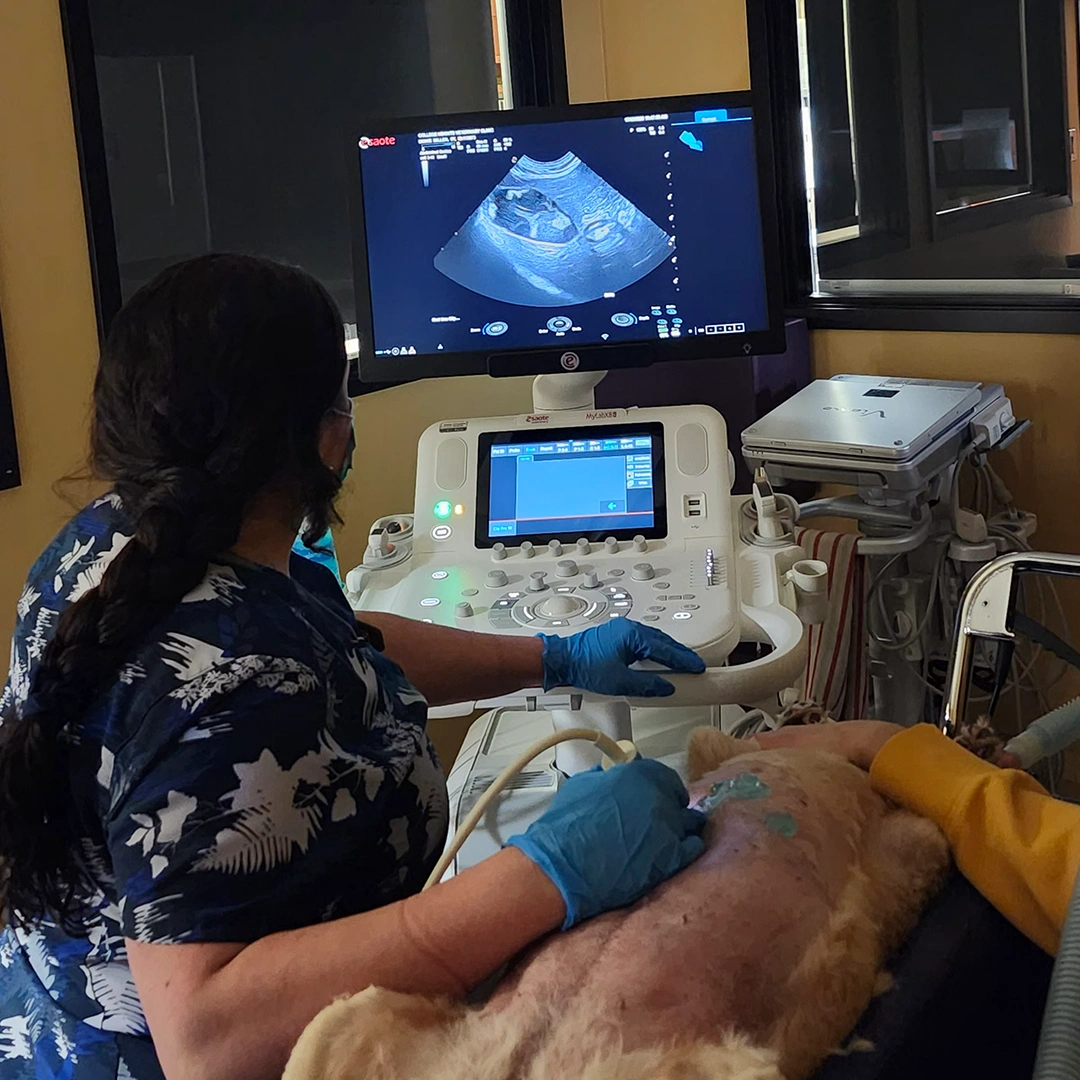
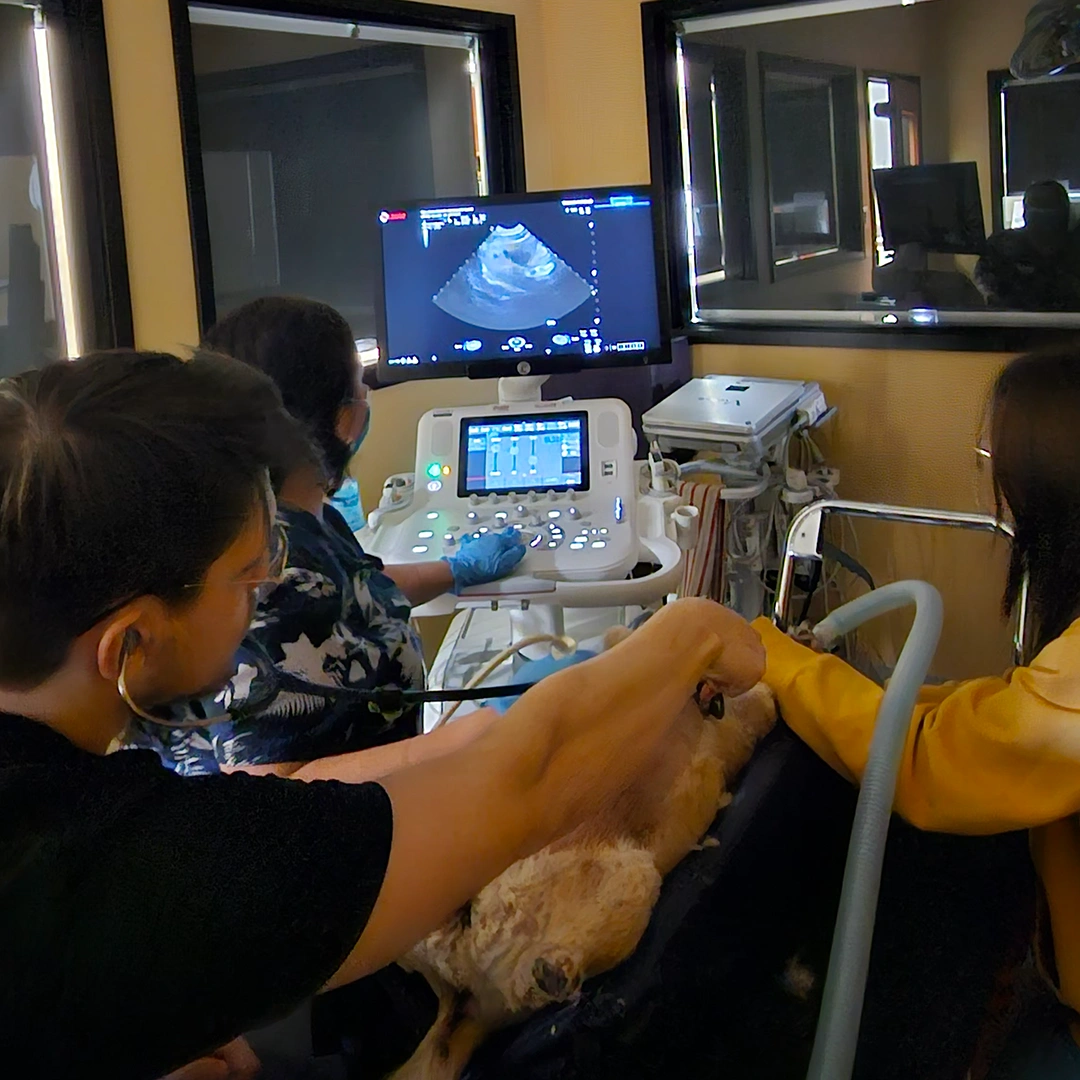
When you bring your pet in for a diagnostic ultrasound, in most cases, we’ll start by shaving a patch of your pet’s fur for clearer imaging. After that we may have them lie down, then we’ll place the transducer, sometimes called a probe, against their skin. The probe let us collect the data for the ultrasound to generate images.
This procedure is entirely painless, but it does require that your pet lie relatively still. If they are very anxious, or we are using an ultrasound to conduct a biopsy, we may administer a light sedative or anesthetic.