
Veterinary Cardiac Ultrasounds in Prince George, BC
What are Cardiac Ultrasounds?
At CHVC, we perform cardiac ultrasounds for dogs, cats, and ferrets in Prince George, BC to help us accurately diagnose heart conditions.
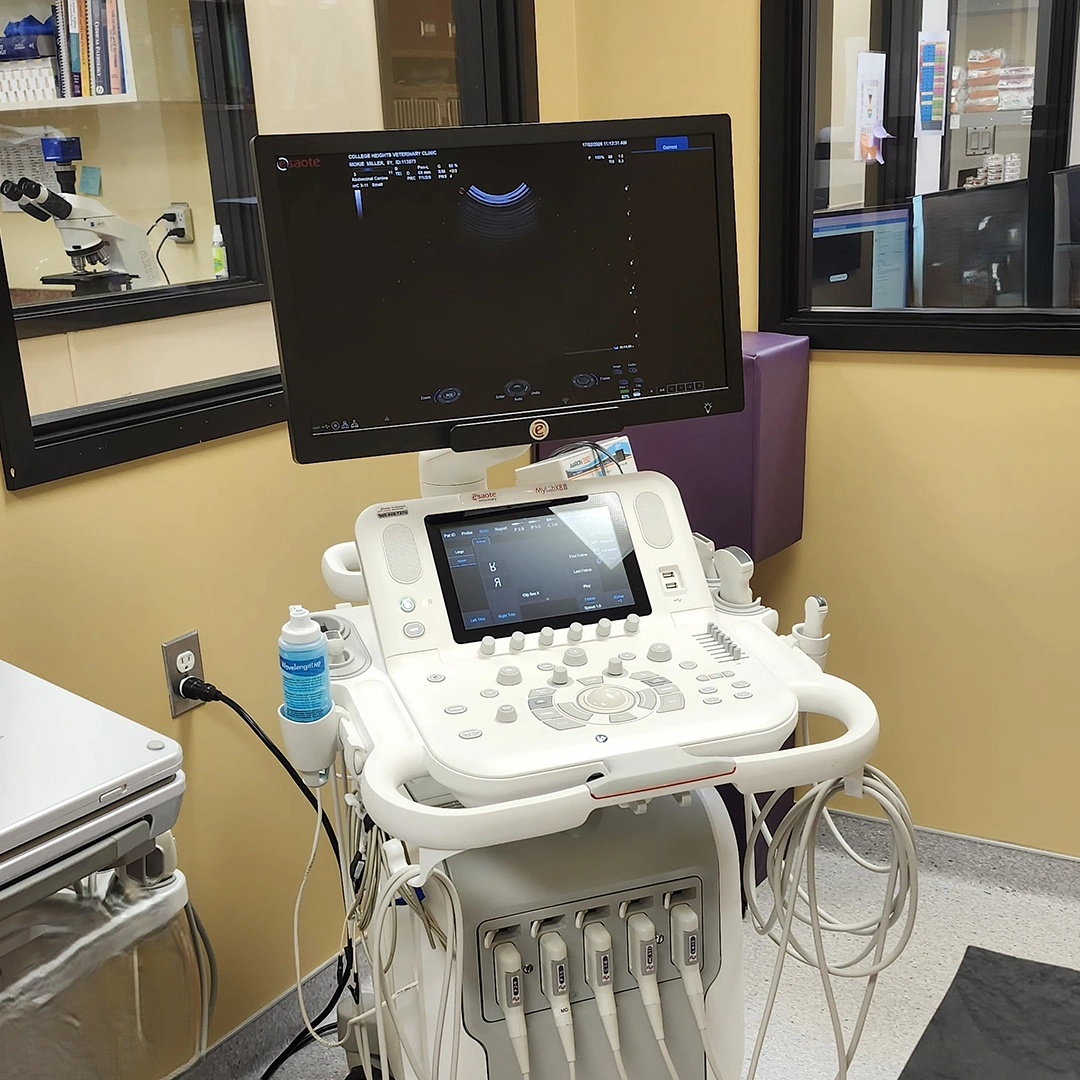
A Cardiac Ultrasound, also known as an echocardiogram, is a non-invasive diagnostic procedure that uses high-frequency sound waves to create real-time images of the heart. Similar to a standard, diagnostic ultrasound, cardiac ultrasounds focus specifically on the heart and surrounding structures.
Cardiac ultrasounds require in-depth knowledge, training, and expertise to perform. They also require specialized cardiac transducers and software to properly evaluate and measure the heart’s function.
Why We Use Cardiac Ultrasounds
To assess heart function, size, and structure and blood flow.
We use cardiac ultrasounds to assess heart function, size, and structure, including the heart muscle, valves, and blood flow. This helps us diagnose heart conditions like cardiomyopathic and chronic valvular disease.
They are particularly helpful when evaluating certain breeds of cats and dogs predisposed to heart disease. Cats in particular can have cardiomyopathy even without physical symptoms, a condition particularly prominent in purebred cats.
We might recommend a cardiac ultrasound if we have concerns after an X-ray, if we detect a heart murmur, or if your pet is showing signs of heart disease such as coughing, fainting, trouble breathing, or a reduced tolerance for exercise.
What to Expect for Your Pet’s Cardiac Ultrasound
A cardiac ultrasound is a relatively simple procedure for pets.
When it’s time for the test, we’ll place your pet on their side on the exam table and use an ultrasound transducer, also called a probe, placed on their chest to direct the sound waves that provide ultrasound data. Depending on your pet’s breed, we may need to shave a small area of fur for better image quality.
A cardiac ultrasound is entirely painless, and it takes approximately 30 to 60 minutes to perform, sometimes a bit longer.
Once the ultrasound is finished, we’ll interpret the results and discuss any findings with you. From there we’ll recommend a course of treatment or further testing.